Self-custody goes mainstream.
Back in 2022, investing on-chain was a hassle. We made a category that assumes expertise into an experience as simple as any mainstream banking app.
- Company
- Picnic
- Segment
- Consumer Crypto
- Year
- 2022 – 2025
- Role
- Head of Design
- Stack
- React Web, Figma, Notion
Investing on-chain was a hassle, and we set out to fix it.
I joined Picnic as the first hire in 2022 to lead product design and customer discovery. On-chain investing was a chore — external wallets, gas fees, complex networks, and more. I dug into these pain points to understand how we could make them more accessible.
Over several years and many iterations, we built a self-custody platform where anyone invests in any asset as easily as using their bank — with self-custody and none of that friction in sight. This work moved $100M+ for 20,000+ users and led to our next funding round, backed by names like IDEO Ventures and the Ethereum Foundation.
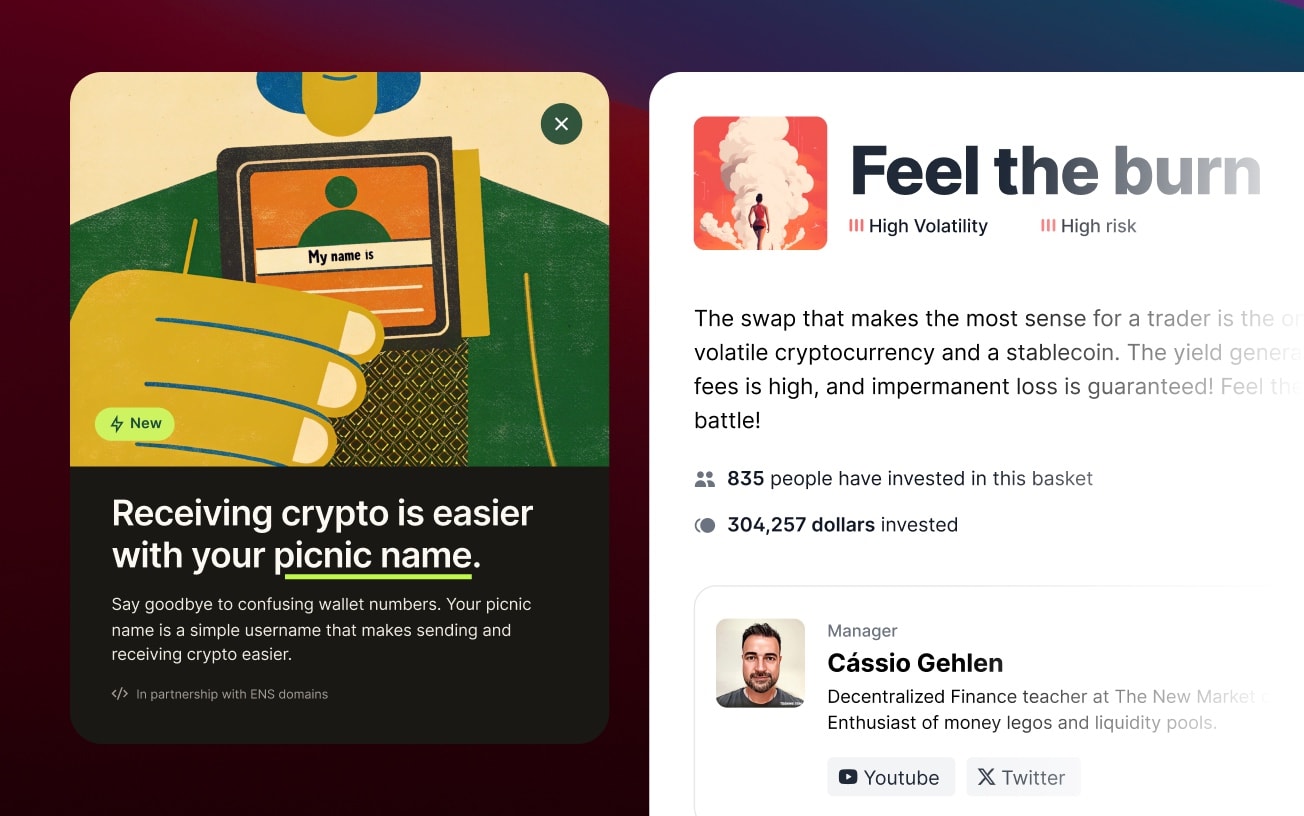
A category with no playbook, built on infrastructure that was still maturing.
Our vision was clear: make self-custody investing as easy as using a banking app. The challenge was that nobody had built it yet. Account abstraction was only just becoming viable; there was no playbook, and the existing crypto user experience was daunting — external wallets with no real-world equivalent, gas fees, fragmented networks. We were at the vanguard of the category, designing for technology that was still maturing under our feet.
Listening to users and making raw technology invisible.
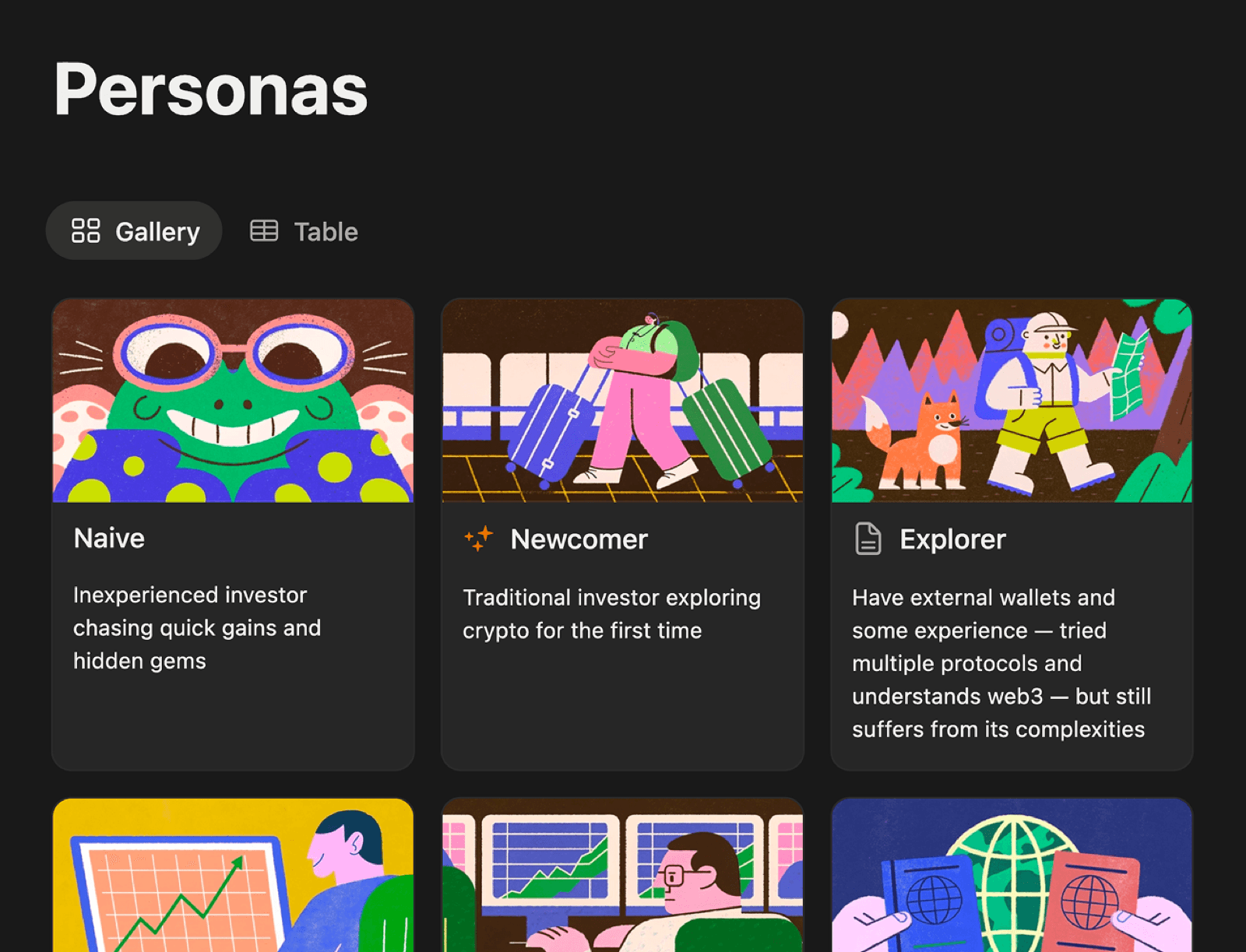
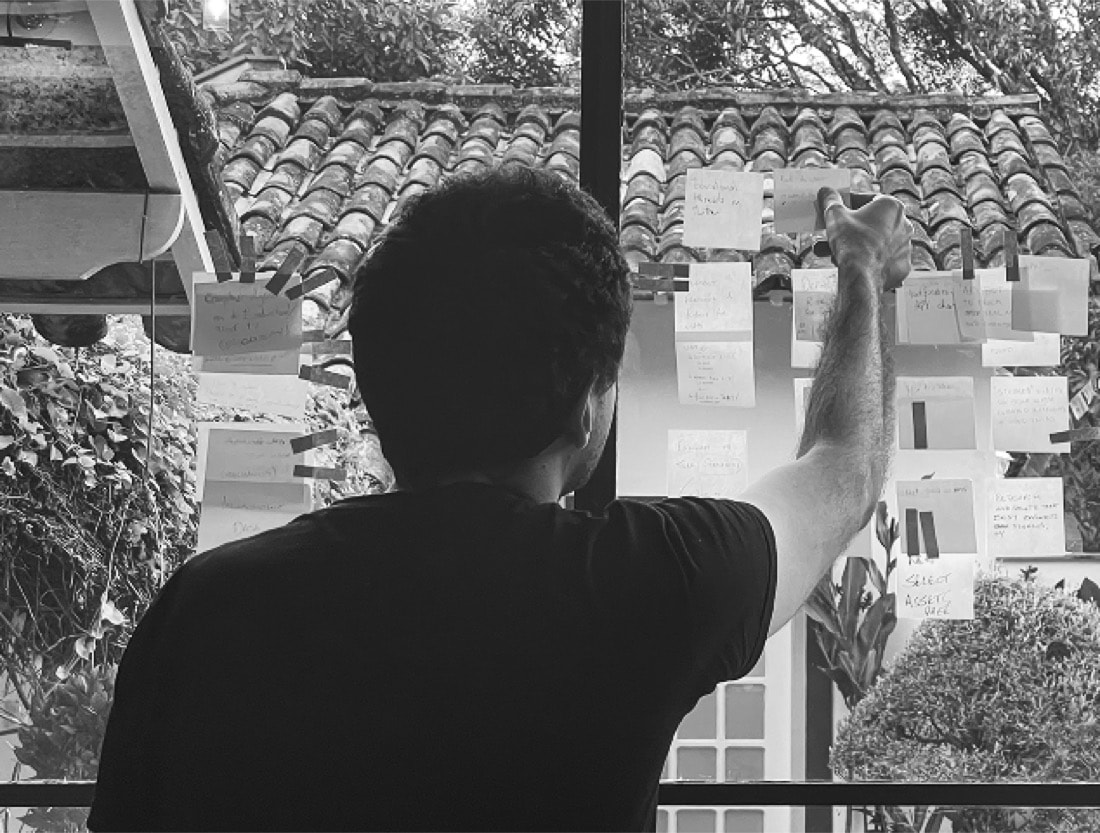
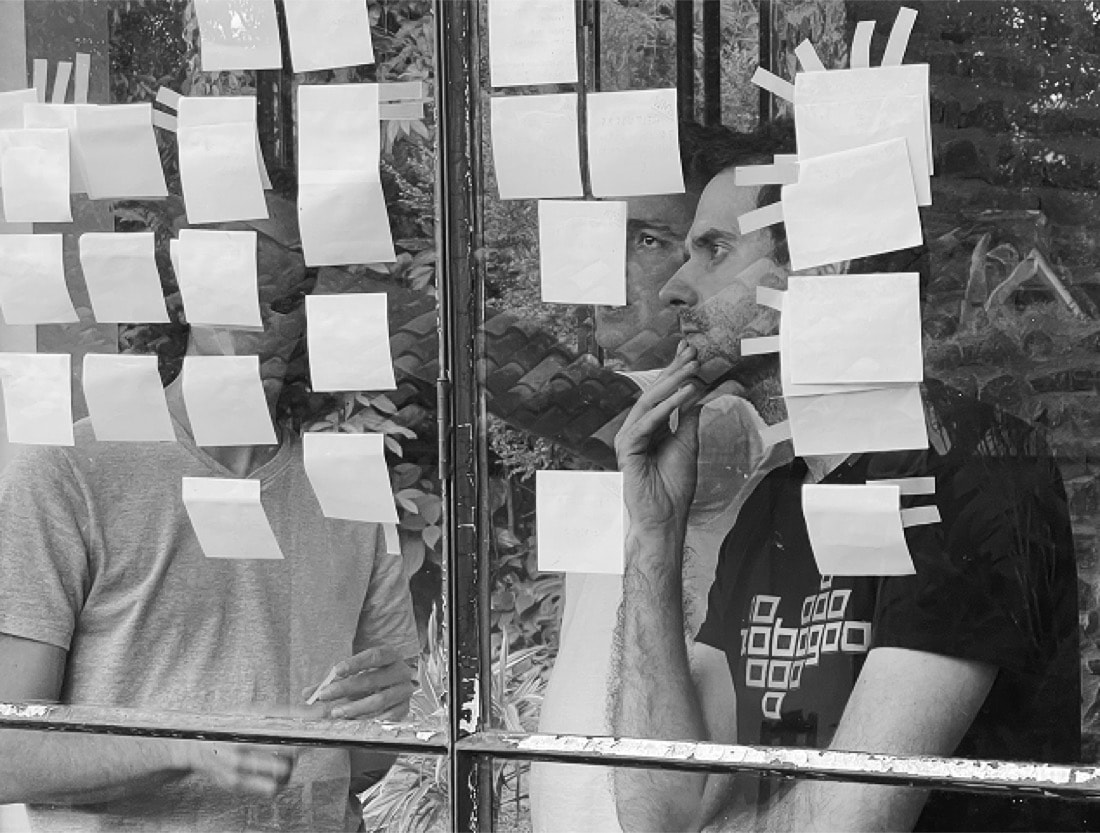
I interviewed users ranging from beginners to experts to uncover opportunities. All wanted to invest on-chain, but each group faced a distinct obstacle. Some were sold on self-custody but discouraged by cumbersome tools. Others lacked the technical know-how yet still wanted access to non-mainstream assets. Even advanced users struggled to move funds in and out of crypto.
Our job was to make all of this complexity invisible. Every feature we built came out of these conversations, aimed at a real problem rather than a guess. Much of my role was negotiating between the ideal experience and what the technology could actually do in the early 2020s — my work ranged from writing feature requirements to designing the interface and collaborating on frontend code.
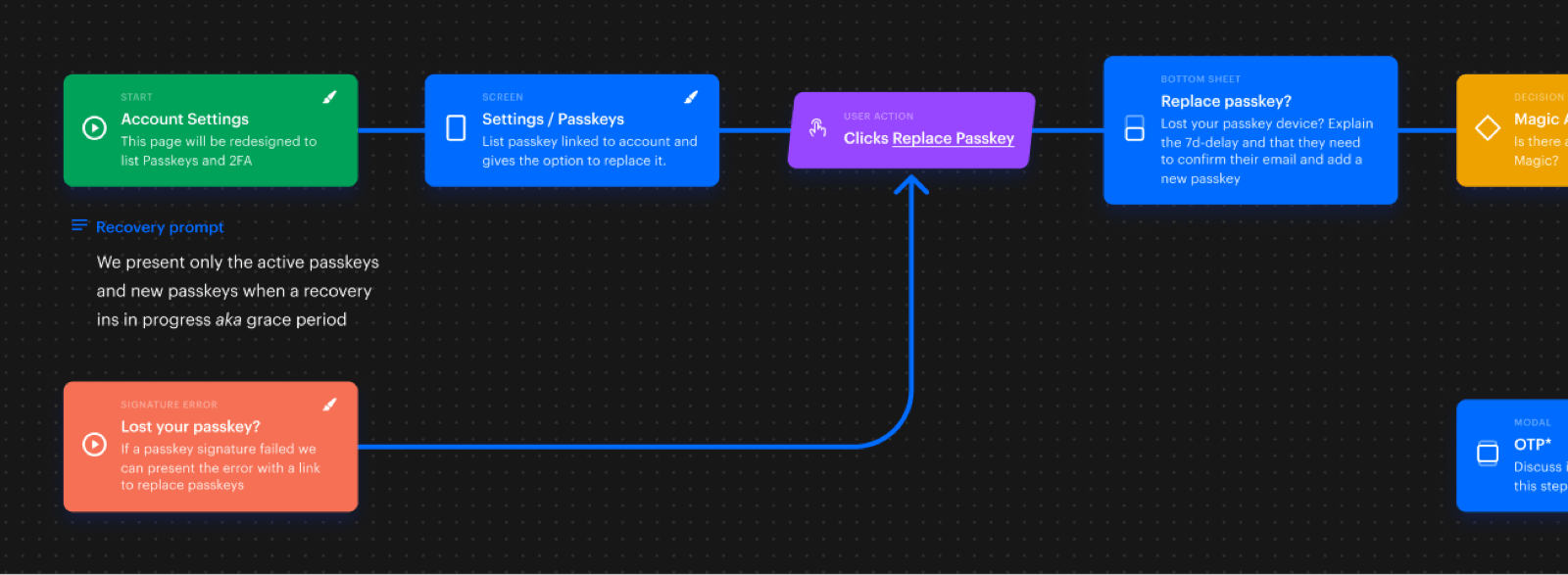
Each decision eliminated something the user shouldn't have to think about.
We made countless decisions, both big and small, always guided by three core principles:
Abstraction
We used abstraction to minimize cognitive load, ensuring that users never had to wrestle with unnecessary complexity or unfamiliar concepts.
External wallets as optional: Rather than forcing users to master the ins and outs of external wallets, we introduced email-based self-custody. Opening an account felt just as intuitive as signing up for any mainstream digital service, lowering the barrier to entry.
No gas fees: Requiring newcomers to first purchase a network token before transacting is unreal. We removed this friction by hiding gas fees entirely from the user experience. What started as us sponsoring transaction fees eventually evolved into a seamless, fully automated solution powered by ERC-4337 smart accounts.
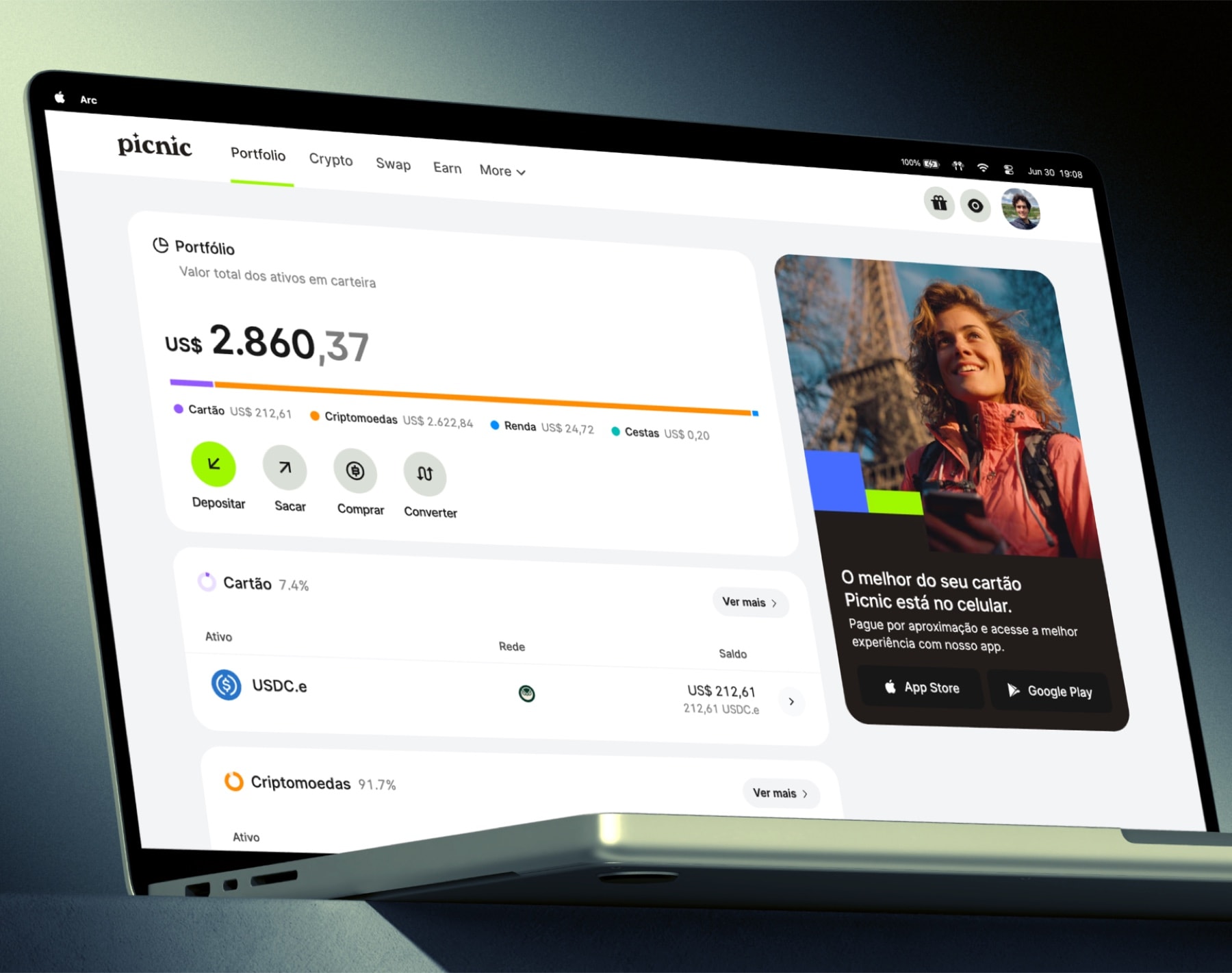
Dollars, not stablecoins: The user's balance is held in stablecoins but shown as their underlying currencies instead. This helps users understand their holdings at a glance, making the platform more approachable for all experience levels.
Leverage familiar mental models
Instead of following web3 trends, we look into mainstream fintechs as our main references to leverage patterns most users are familiar with.
Asset first, network second: When someone learns how Chainlink can grow into a key player in blockchain infrastructure, they want to invest in that idea and care less about which chain they hold the asset on. Unlike the usual pattern in crypto products, our users simply choose what to buy, and we handle all the network routing in the background, taking into account factors such as price impact.
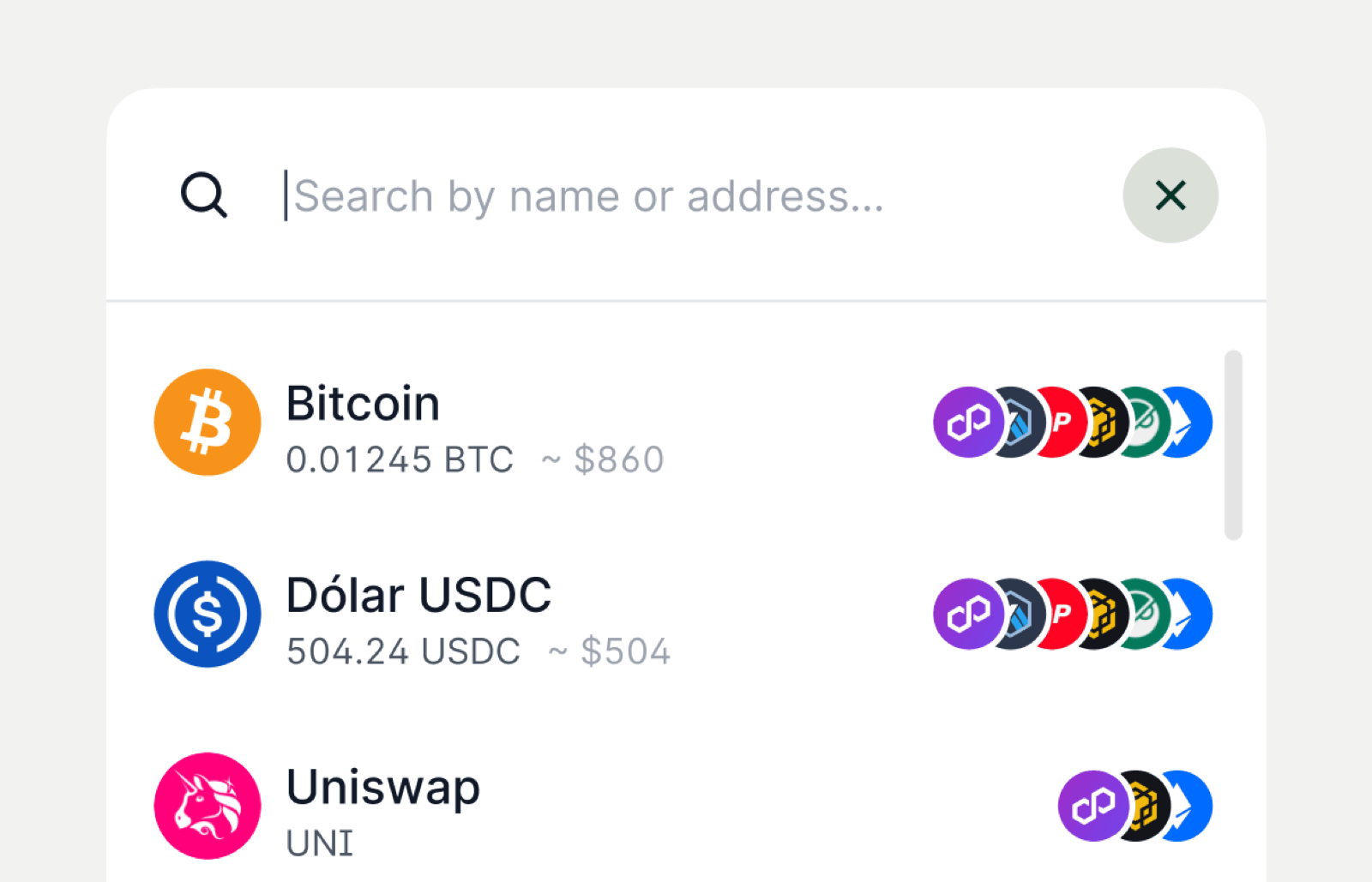
Banking rail integration: We integrated transfers to and from banks in Brazil, Europe, and the United States, enabling users to move funds from any bank account to on-chain assets in minutes.
Progressive disclosure
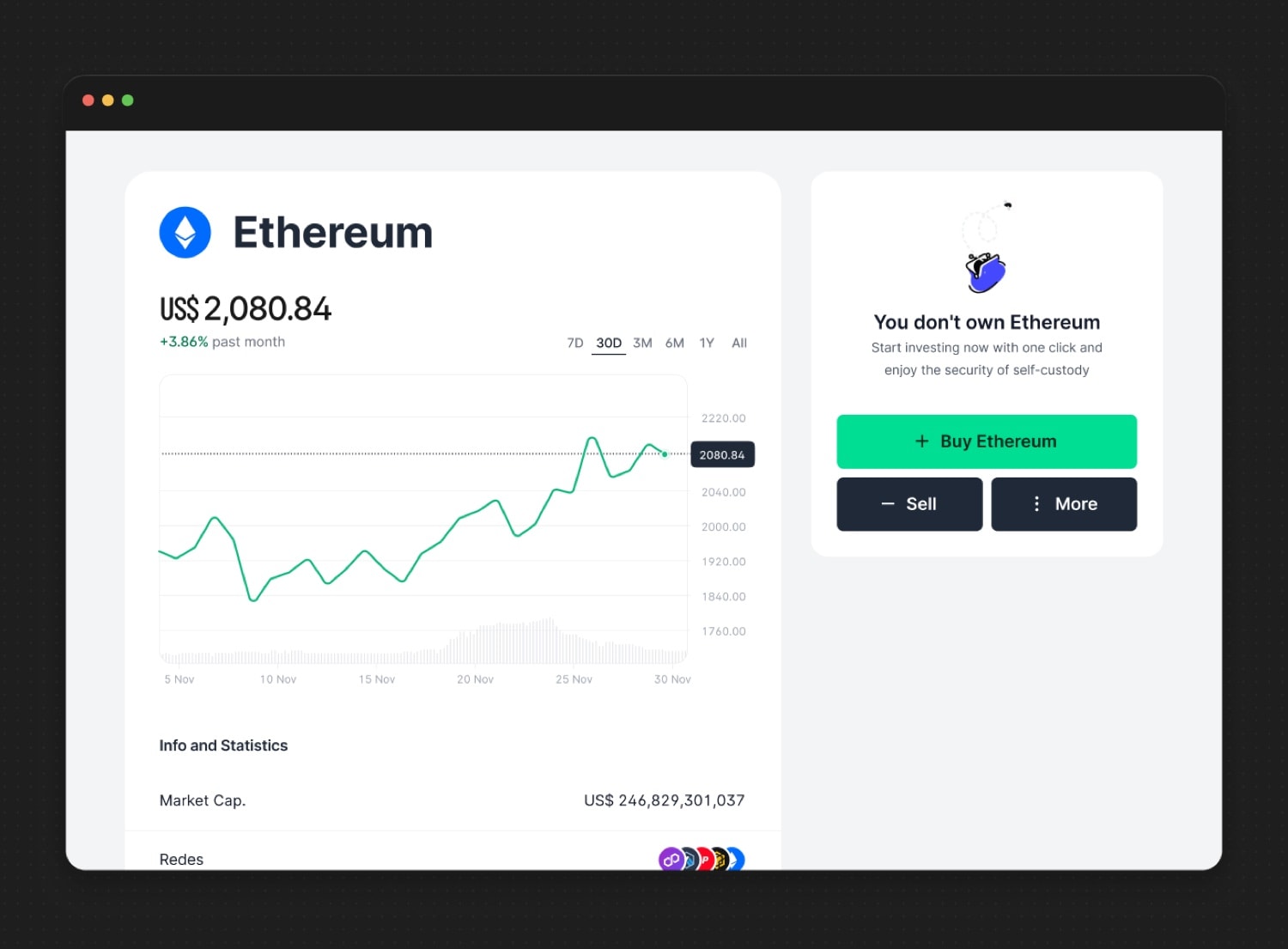
To serve both beginners and power users, we've kept the core experience simple, with more advanced options just one click away. Experienced users can view the stablecoin reserves behind their balance, choose between available chains, and access advanced details.
From Intimidating to Intuitive.
Over those years, Picnic processed $100M+ for more than 20,000 users. The most validating outcome was the user base itself: over 80% had never owned an external wallet. We were introducing new users to self-custody, and most never realized how much complexity we had removed.
The thing I like the most is how easy it is to invest. I'm a fisherman — honestly, I'm not great with technology, but even I learned.
I feel Picnic it's ideal for people who like things uncomplicated. Common folks and older people, just like me.
Lessons learned recalled.
This journey was full of roadblocks, and each one either taught me something new or reinforced fundamentals that are easy to forget when you're deep in the work.
Designing on emerging infrastructure means owning its failure modes.
Gas spikes, failed transactions, and cross-chain swap dust forced me to learn the underlying infrastructure as deeply as I understood the user. In this context, good design was less about polished screens and more about trust: graceful recovery, predictability, and clear feedback when the chain misbehaved.
Reality is far messier than any playbook.
Our progress came from relentless iteration: hitting walls, admitting we were wrong, and returning to the drawing board. There was no single breakthrough — just countless small improvements. The journey is long and rarely neat, so believing in what you’re building while staying grounded is the most important thing you can do.
Some friction is worth keeping.
We stripped sign-in down until it felt effortless, but newcomers read passwordless login as "so simple it couldn't be that safe," while experienced users second-guessed whether they really held their own keys.
Explaining the tech in blog posts and onboarding moved the needle far less than a "connect wallet" option and a biometric prompt before each transaction. Users arrive with expectations from the category they think they're in, and meeting those rituals — even the redundant ones — buys more trust than any amount of explaining what happens behind the curtain.
“Raph has a rare talent for navigating across disciplines and turning complex processes into smooth, seamless experiences.”
